
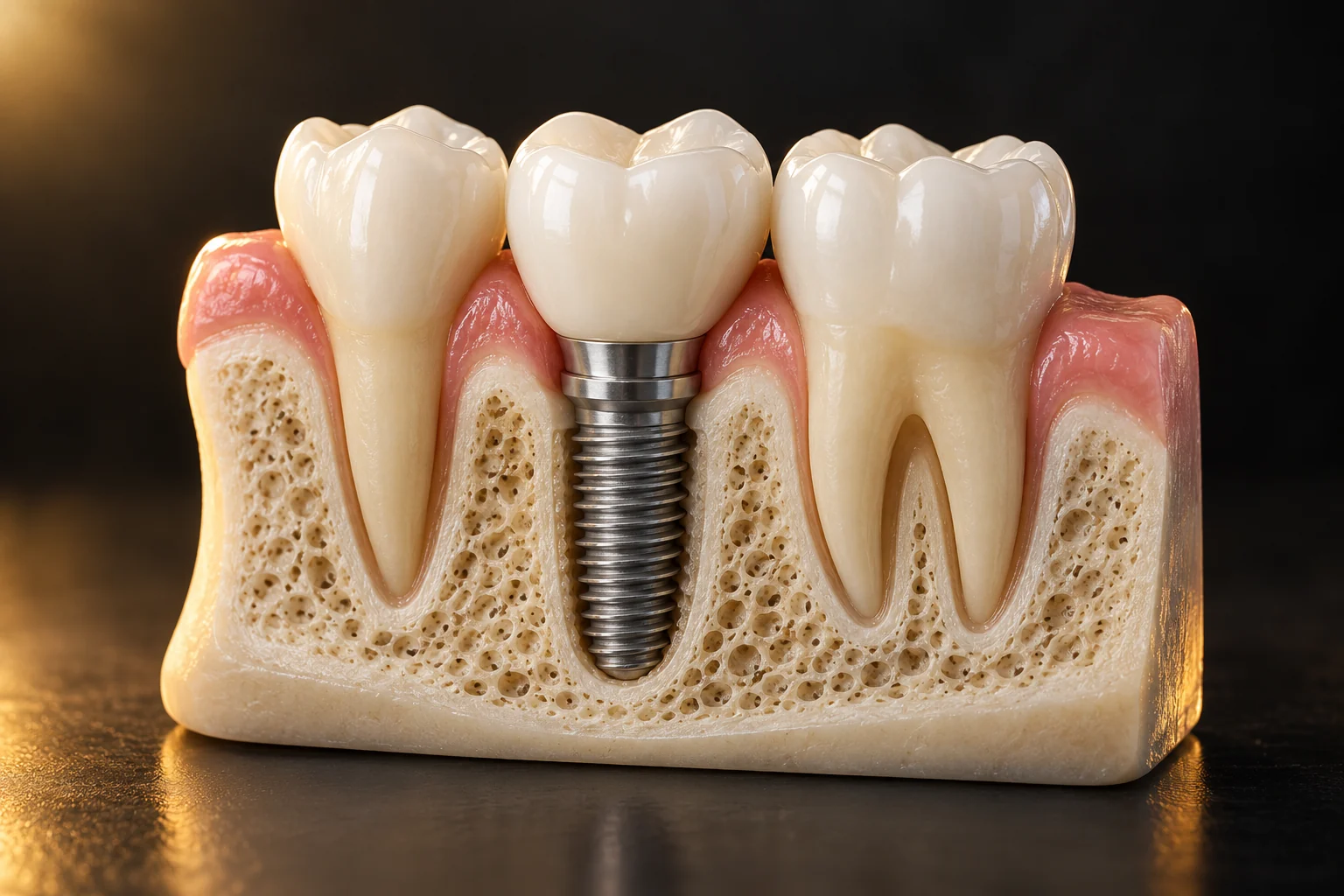
Dental implant recovery has two different milestones: feeling comfortable again and allowing the implant to bond with bone. These do not happen at the same speed. Understanding the difference helps you plan meals, work and follow-up without rushing the final restoration. This guide explains the questions to discuss with your dentist before treatment in Istanbul.
What determines your dental implant recovery timeline?
Your starting point matters. The number of implants, an extraction, bone grafting, gum health and the type of temporary teeth can change the plan. Smoking, some medical conditions and medicines also deserve discussion. Share your full history, including supplements. Never stop prescribed medication because of a general article.
The first stage concerns the soft tissues around the surgical site. Meanwhile, bone develops a stable connection with the implant. Your dentist evaluates both before deciding when the implant can carry the planned biting forces. A photograph cannot confirm that this process is complete.
| Stage | Main priority | Question for your dentist |
|---|---|---|
| Immediately after treatment | Comfort, bleeding instructions and protecting the site | What should I do tonight? |
| Early recovery | Suitable food, hygiene and symptom monitoring | When is my first review? |
| Bone healing | Avoiding excessive pressure and attending reviews | How will you assess stability? |
| Restoration and maintenance | Bite checks and long-term cleaning | What follow-up do I need at home? |
Dental implant recovery during the first days
Some soreness, swelling or bruising can occur. However, the expected amount depends on the procedure. Ask for written instructions and an after-hours contact before leaving. Use only the medication recommended for you, in the instructed dose. Do not add an antibiotic, mouthwash or painkiller simply because another patient used it.
Plan a quieter schedule rather than arranging demanding activities immediately afterwards. Ask when you can drive, work, exercise and travel, especially if sedation was involved. Your companion should understand any instructions that apply on the day of treatment.

Food and cleaning during dental implant recovery
Choose food that feels comfortable and fits the dentist’s instructions. Examples may include yogurt, eggs or smooth soup served at a suitable temperature. Avoid testing the implant by biting hard food. Ask whether you should chew on the other side and how long any food restrictions apply to your temporary restoration.
Cleaning also needs a specific plan. The routine for the surgical area can differ from the routine for your other teeth. Ask when brushing can restart there, which brush to use and whether a rinse is needed. Once healing permits, learn the method for cleaning around your particular implant restoration rather than guessing with an unfamiliar tool.
Dental implant recovery: when to contact your dentist
Contact your treating dentist promptly if symptoms worsen instead of settling, bleeding persists despite their instructions, you develop fever, or the temporary tooth feels loose. Do not try to tighten it yourself. Difficulty breathing or swallowing, or rapidly increasing swelling, requires urgent medical attention. A remote message should not delay emergency care.
Keeping a brief symptom record can make a conversation clearer. Note when a change started and what you were doing. Your dentist can then decide whether you need reassurance, a changed care plan or an examination.
Follow-up protects the long-term result
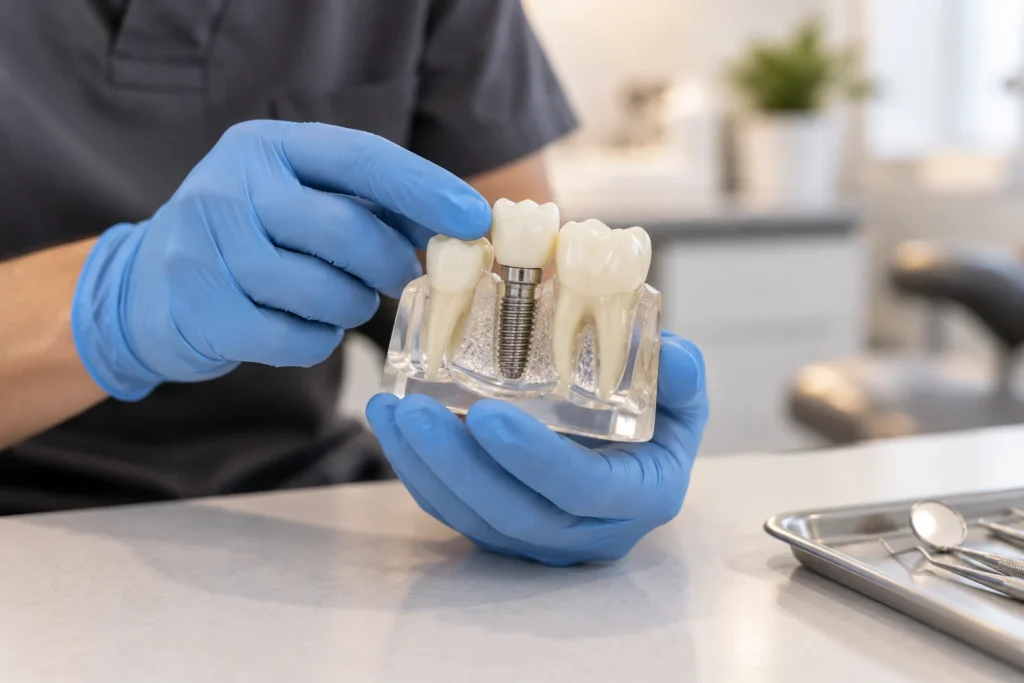
Dental implant recovery continues beyond the point when you feel better. Keep the review appointments even if the area seems comfortable. Before returning home, request your treatment summary, implant details and the schedule for the next stage. Agree who will provide local checks and how urgent concerns will be handled.
The American Dental Association’s implant overview explains why bone healing and the final tooth are separate stages. The NHS aftercare guide also emphasizes follow-up. These are background resources; your own instructions take priority.
Frequently asked questions
Does feeling no pain mean the implant has healed?
No. Comfort does not prove that bone integration is complete. Your dentist assesses readiness for the next treatment stage.
Can everyone receive a final tooth immediately?
No. Immediate teeth are appropriate only in selected cases. A temporary restoration and a final restoration have different roles.
When can I fly after the procedure?
Ask the treating dentist before booking. Surgery complexity, symptoms and the planned review determine suitable timing; there is no universal travel interval.
Plan your consultation at Crystal Istanbul
Explore our dental implant service and request an individual consultation. Bring your questions about dental implant recovery so the discussion covers treatment, aftercare and the practical arrangements for returning home.
General educational information, not an individual diagnosis. Discuss treatment decisions with your dentist.