
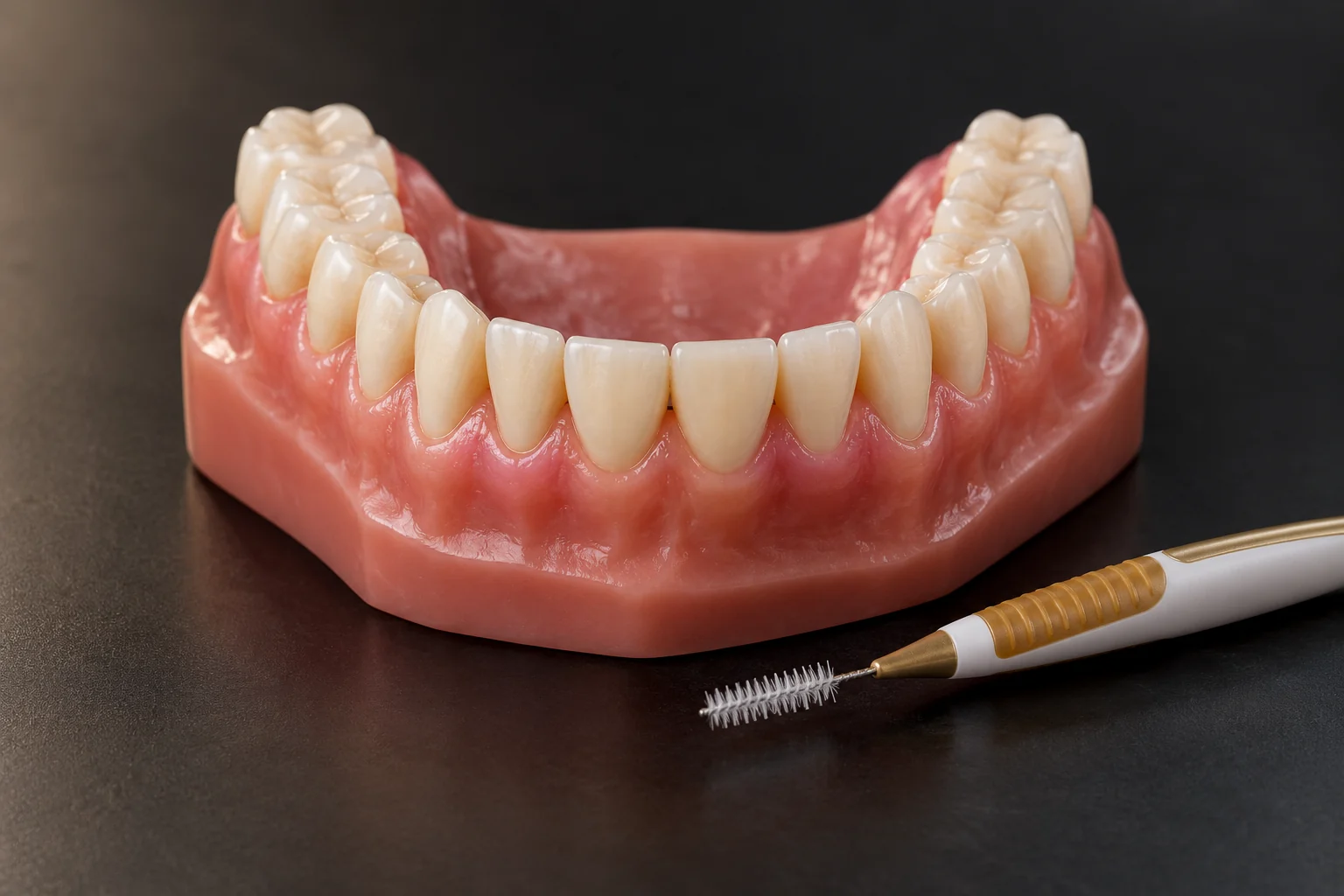
Gum health belongs at the start of a cosmetic dental conversation. Before choosing veneers, crowns or whitening, ask how the tissues around your teeth will be assessed. A smile plan should account for comfort, cleaning and follow-up as well as appearance. This guide helps you prepare that discussion without trying to diagnose your gums from a photograph.
Gum health starts with a clear history
Tell the dentist about bleeding, swelling, changes in the gum line or a persistent unpleasant taste. Mention whether cleaning has become uncomfortable. Bring your medication list and describe tobacco use and relevant medical history. Give the clinician the full picture instead of deciding for yourself which details might matter.
Write down when you first noticed a change and whether it affects one area or several. If a previous practice has provided measurements or treatment records, ask whether they would be useful to share. Do not judge the situation only by how much pain you feel: the absence of pain is not a complete assessment.
Assess gum health before selecting a treatment
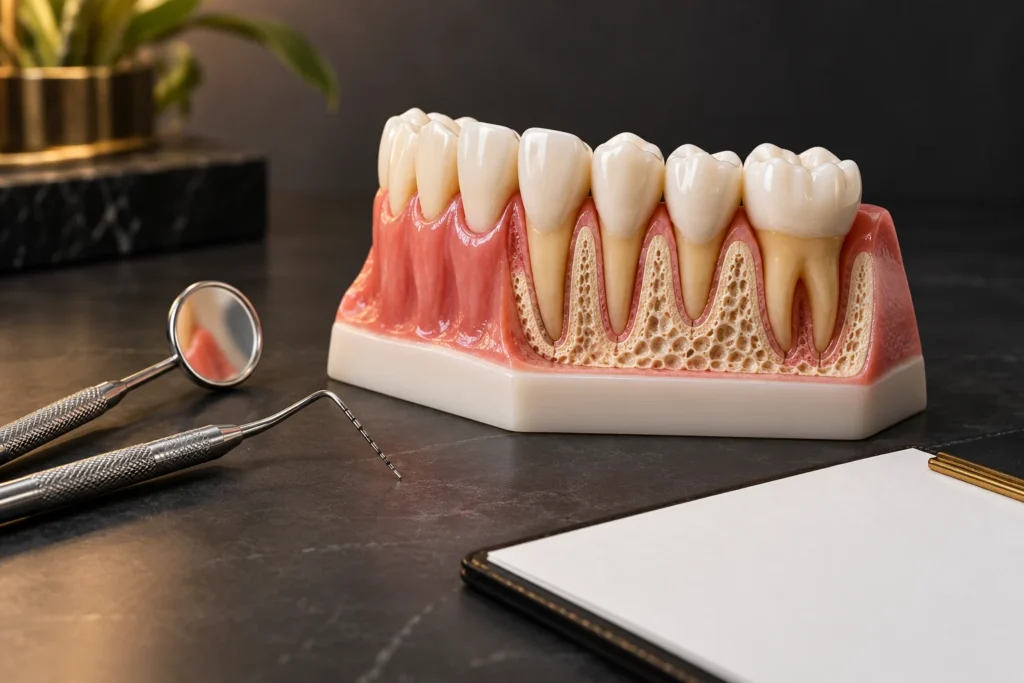
A gum examination may include measurements around the teeth and a discussion of the supporting tissues. Ask what has been found, what it means for your proposed cosmetic work and whether any care should come first. The aim is to understand the sequence, not simply to add appointments without an explanation.
| Consultation question | What to clarify |
|---|---|
| Are the tissues ready? | Findings and any care needed first |
| Can I clean the proposed work? | Access and suitable tools |
| When will you reassess? | A defined review before the next stage |
| Who provides long-term checks? | Local and travel follow-up arrangements |
A practical routine for gum health
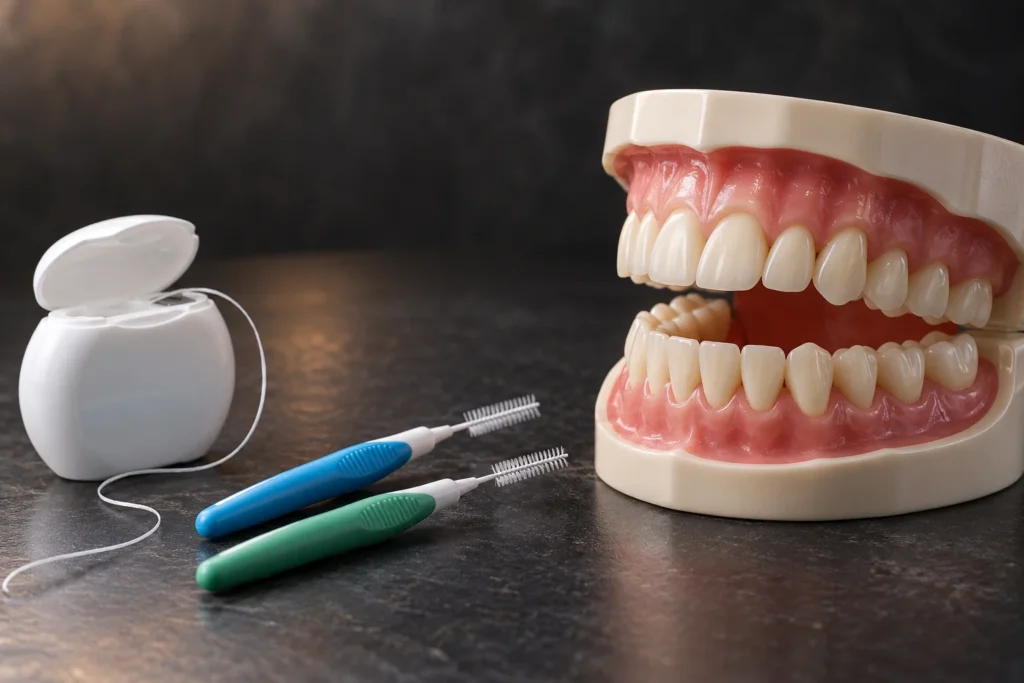
Daily brushing and cleaning between teeth are important parts of care. Ask your dentist or hygienist to demonstrate tools that fit your own spaces and any existing restorations. A brush that looks right online may not be the right size for you. Comfortable access matters more than owning many different products.
Build the routine into an ordinary part of your day. If a particular area is difficult to reach, show the problem at your next appointment. A practical demonstration can be more useful than another general instruction to clean better. Do not force an unsuitable tool into a tight space or use sharp household objects.
Reassessment is part of the cosmetic plan
If gum care is recommended first, ask what will be checked before proceeding. Keep the explanation with your treatment documents. Changes to the plan should be discussed before irreversible work begins. A travel booking or a promotional deadline should not become the reason to skip an agreed clinical review.
Agree how you will contact the practice if symptoms change. Significant swelling, severe pain or loose teeth need prompt dental attention. Difficulty breathing or swallowing requires urgent medical care. Keep routine review appointments even when you feel comfortable, following the interval recommended for your own situation.
Frequently asked questions
Can whitening or veneers treat gum disease?
They should not be viewed as a replacement for assessing and managing a gum problem.
Does no bleeding mean that a check is unnecessary?
No single sign confirms the condition of all supporting tissues. Follow your dentist’s review advice.
What should a written plan include?
The findings, initial care, reassessment and proposed next stage, together with who provides follow-up.
Read the ADA gum disease information and NHS gum care guide. Explore our smile treatment service and arrange a consultation that includes gum health.
General educational information, not an individual diagnosis. Discuss treatment decisions with your dentist.