
Root canal treatment usually uses local anaesthetic to keep you comfortable during the procedure. Temporary tenderness can follow. The number of visits depends on the tooth and its condition. A complete plan includes treating the canals, restoring the tooth and arranging follow-up. This guide helps you prepare questions for your Crystal Istanbul consultation rather than guess a diagnosis from pain alone.
Editorial preparation: Crystal Istanbul. Source-supported general information; an individual dental examination is needed for diagnosis and treatment planning.
When do I need root canal treatment rather than a filling?
Damage or inflammation affecting the pulp inside a tooth may require more than a surface filling. Deep decay, a crack or an injury can be involved. Pain alone does not establish the diagnosis. Equally, a tooth without pain is not automatically healthy. The American Association of Endodontists explains how canal treatment can help preserve a natural tooth.
Tell the dentist when symptoms began, what triggers them and whether they linger after hot or cold drinks. Mention swelling, biting discomfort and previous injuries. Ask what the examination and imaging show. You should also understand whether the remaining tooth can support a restoration. A phone photograph is useful background, but it cannot settle these questions.
Does root canal treatment hurt during the appointment?
Local anaesthetic helps control pain. You may notice pressure or movement, but tell the dentist immediately if you feel sharp pain. They can reassess your comfort and anaesthesia. Before starting, agree on a signal to pause. Explain any previous difficult experience instead of assuming every visit must feel the same.
Also discuss anxiety, allergies, medicines and medical conditions. Do not stop prescribed medicine or add a sedative yourself. The NHS overview describes anaesthesia and the main treatment stages.
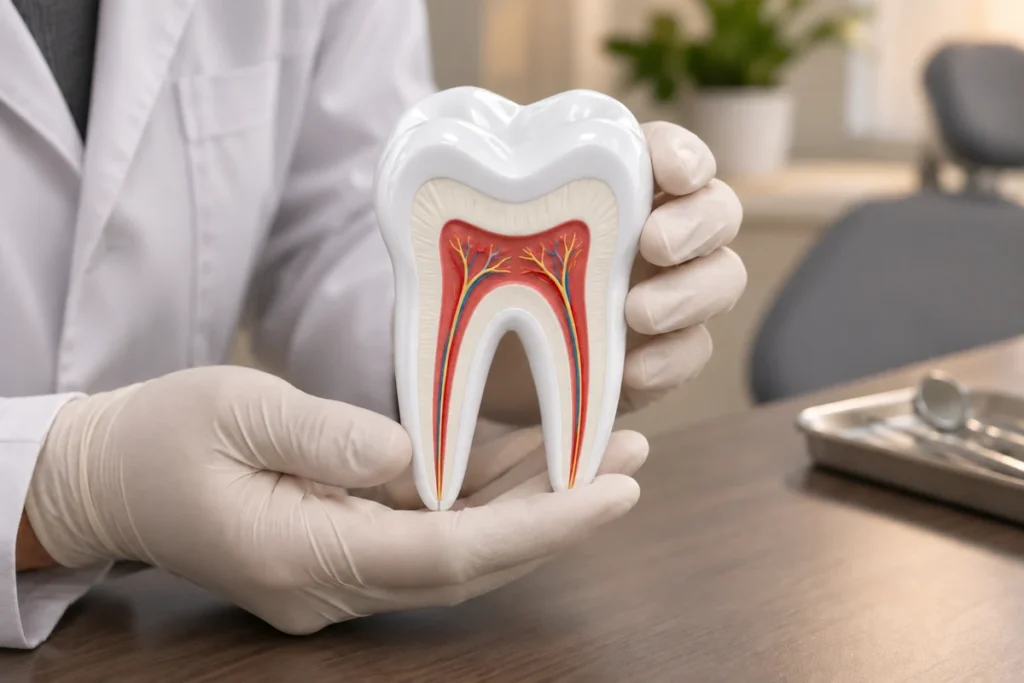
How many appointments will I need?
A dentist may recommend one or several treatment visits; two or more are common. Appointments can take around one to two hours, sometimes longer. An examination is needed before giving an individual schedule. Visits for the final filling or crown may be separate from work inside the canals.
Bristol Dental School notes that appointment number and length vary between patients. If travelling to Istanbul, request a written sequence of visits and leave room for a review if needed. Ask what could change the schedule before booking a fixed departure. A flight date should not decide which clinical steps are necessary.
| Part of your plan | Question to ask |
|---|---|
| Assessment | What explains my symptoms, and can the tooth be restored? |
| Canal treatment | How many visits are expected, and what could change this? |
| Final restoration | Do I need a filling or crown, and when? |
| Follow-up | When is my review, and whom should I contact? |
Will I need a crown, or should the tooth be removed?
The restoration depends on the remaining tooth, its position and the forces placed on it. Ask why a crown or filling is recommended for your tooth. A clear explanation matters more than a standard package name. Our dental crowns page introduces the role of a crown; your examination determines suitability.
Extraction is not an automatic choice for every painful tooth. First ask whether it can be preserved and why removal might be necessary. The AAE describes options for a damaged tooth, including situations where saving it is not possible. Discuss the consequences and replacement plan before deciding.
What should I do after root canal treatment?
Follow your dentist’s instructions and wait until numbness has worn off before chewing. Protect the treated tooth from hard foods and heavy biting until cleared, especially with a temporary filling. Clean gently and attend the final restoration appointment. The AAE aftercare guidance explains why this stage matters.
Ask for written instructions that account for your medicines and health history. Clarify how to care for a temporary filling, which foods to choose and when normal chewing can resume. If general advice differs from your personal instructions, ask your dentist to explain. Do not replace an individual plan with another patient’s experience.

When should pain or swelling prompt a call?
Temporary tenderness can occur. However, severe or increasing pain, swelling or returning symptoms need dental advice. Contact the practice if a temporary filling comes out or the bite feels high. Tell them what changed and when; do not simply wait for a future travel date if symptoms worsen.
Difficulty breathing or swallowing, or major swelling in the mouth, needs immediate emergency care. A suspected dental abscess needs urgent dental assessment. The NHS dental abscess guide distinguishes urgent symptoms from emergency warning signs.
Other questions patients ask
Can antibiotics replace canal treatment?
Antibiotics do not replace treatment of the source inside the tooth. A clinician decides whether they are needed. Do not reuse an old prescription or another person’s medicine. The American Dental Association recommends appropriate, selective antibiotic prescribing.
How much does treatment cost in Turkey?
Request an itemised estimate covering assessment, imaging, canal work, restoration and follow-up. Ask whether retreatment would change the quote. Compare the same scope: a fee for canal treatment alone cannot be compared fairly with a price that includes a crown. An individual estimate follows the clinical assessment.
Can the result be guaranteed for life?
No individual result can be promised for life. Ask about your tooth’s outlook, maintenance and options if problems persist. A useful consultation explains uncertainty and responsibilities clearly. It should leave you with a plan you understand, rather than a promise based only on an advertisement.
Prepare your Crystal Istanbul consultation
Bring five questions: What is the diagnosis? Can my tooth be saved? How many visits are expected? Which restoration is needed? How will follow-up work? Read about our root canal service and request an assessment appointment. Existing imaging, symptom notes and a medicine list help explain your request. The final plan requires an examination.