
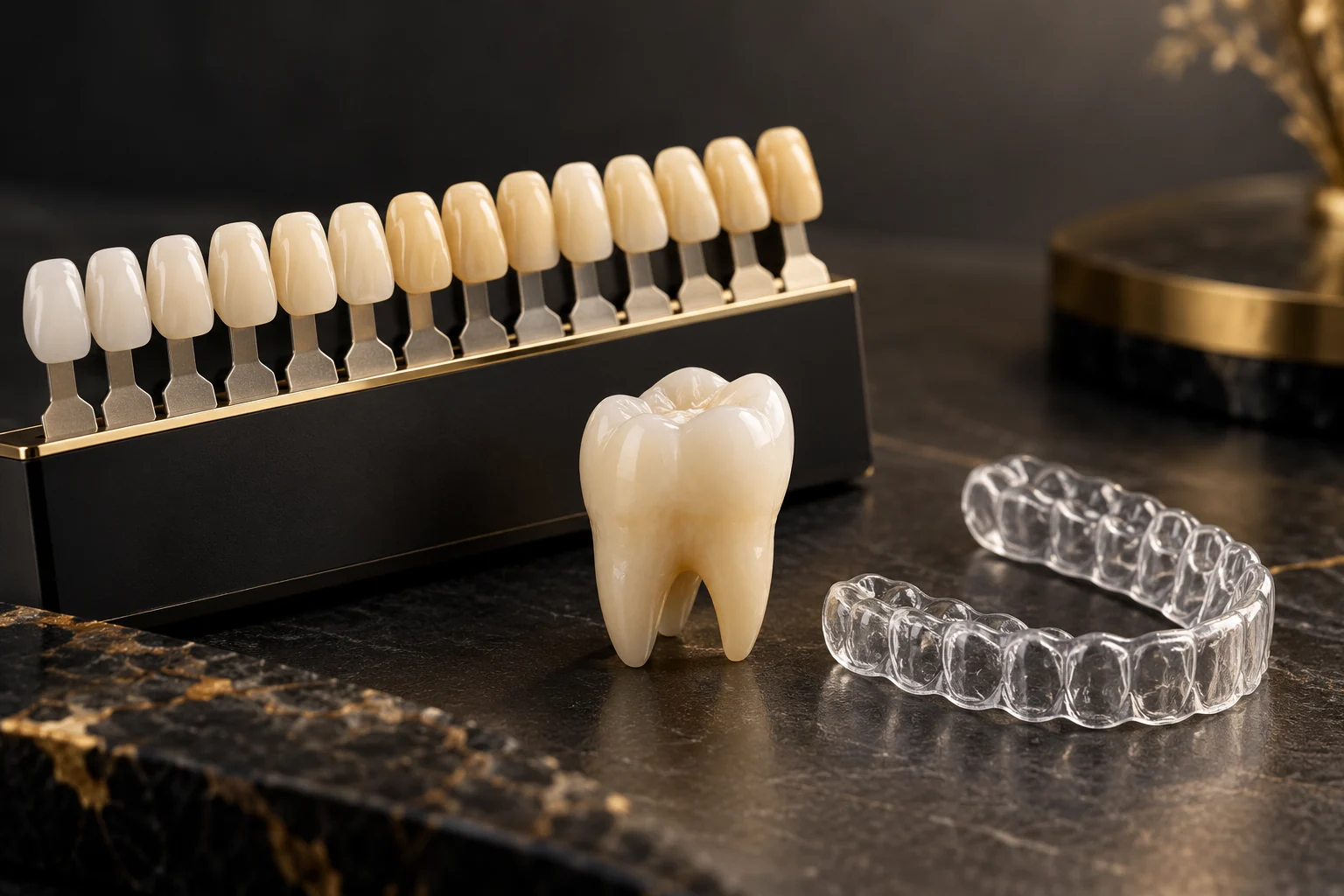
Teeth whitening can lighten natural teeth, but choosing a suitable method starts with understanding your smile. Existing restorations, discomfort and the reason for a color change all affect the conversation. A useful consultation sets a realistic goal and a clear review plan before you buy a kit or book a cosmetic treatment in Istanbul.
Teeth whitening starts with an assessment
Explain what has changed and when you first noticed it. Bring photographs if they help you describe the concern, rather than using them as a promise of a particular result. Tell your dentist about previous sensitivity and any products you have already tried. A single darker tooth deserves its own assessment instead of automatically receiving the same treatment as the rest.
The examination helps separate removable surface stains from a change within the tooth. Ask whether cleaning, monitoring or another approach should come first. Your dentist should explain the reason for the recommendation in language you understand. You should also know what would make the proposed plan unsuitable for you.
Compare supervised teeth whitening options
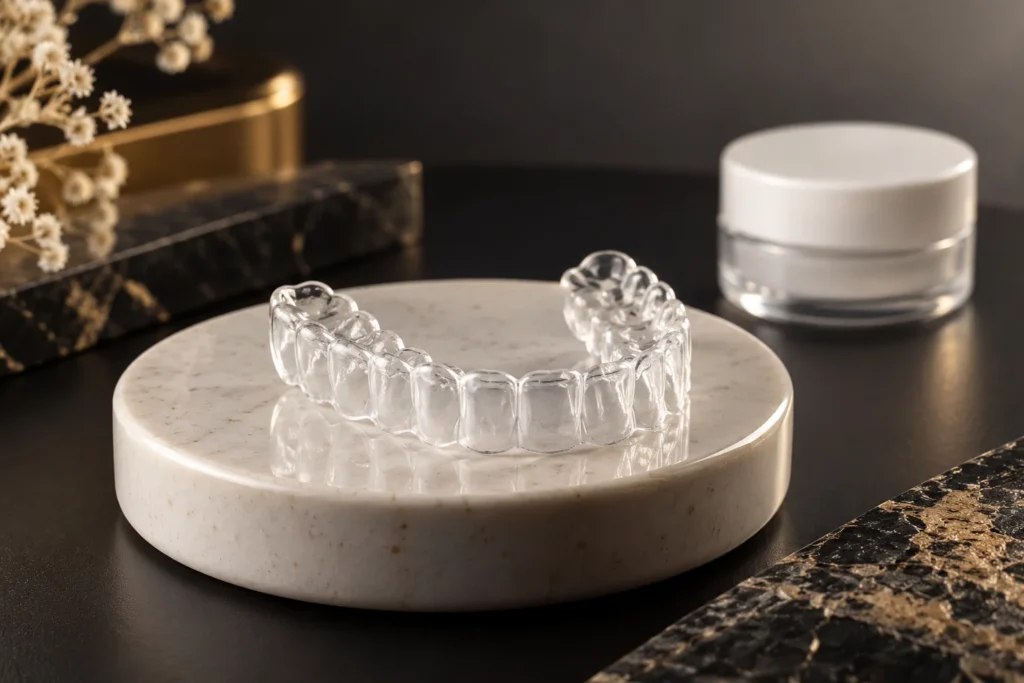
Two common discussions are treatment in a dental practice and a dentist-supervised tray system used at home. Compare the supervision, appointments and responsibilities involved. A shorter appointment does not remove the need for assessment, and a home-based approach still needs clear professional instructions.
| Question | Why it matters |
|---|---|
| Who checks the teeth first? | The plan should follow an examination |
| How will progress be reviewed? | You need a contact and stopping point |
| What is included in the fee? | Compare trays, visits and follow-up |
| What if discomfort develops? | Agree whom to contact before starting |
Teeth whitening and existing restorations
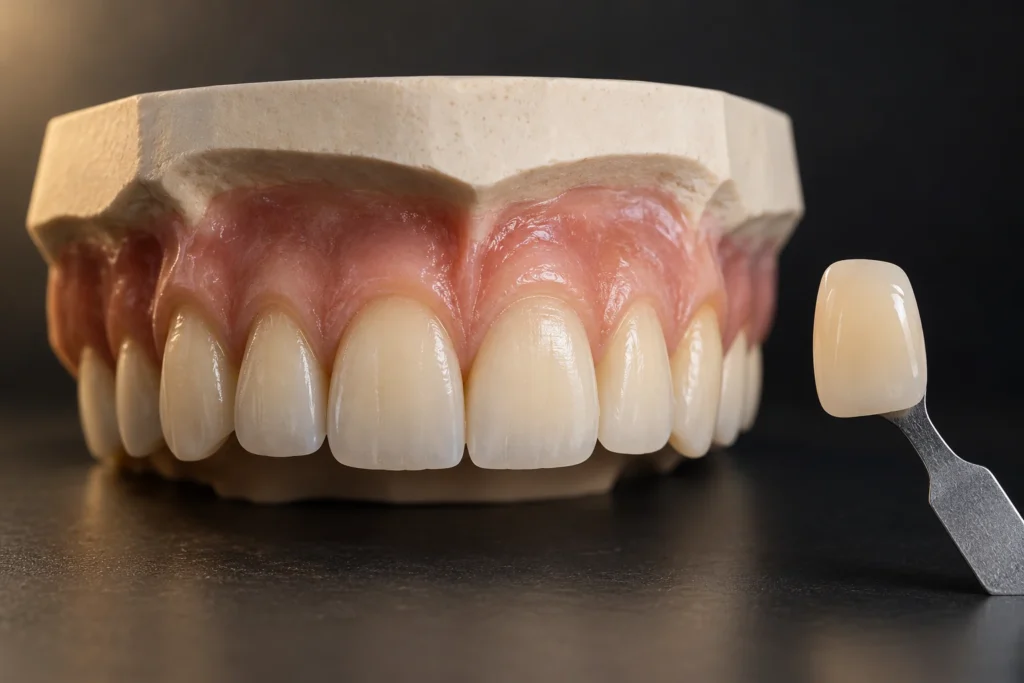
Fillings, veneers and crowns do not lighten in the same way as natural teeth. That matters when visible restorations already match your current shade. Ask the dentist to identify them on a mirror or photograph, then discuss how a change in the surrounding teeth could affect the overall appearance.
If a restoration may need replacing for a separate clinical reason, discuss the sequence before choosing a final shade. Request a written explanation of the work being proposed. Whitening should not become an automatic reason to replace otherwise satisfactory dental work without a clear discussion.
Plan for sensitivity and a natural shade
Temporary sensitivity or gum irritation can occur. Follow your clinician’s directions and contact the practice if symptoms concern you. Do not increase the amount or duration of a product in pursuit of a faster change. Avoid combining several whitening products without professional advice.
Choose your goal in suitable lighting and look at your whole smile. A very bright sample may not be your preferred result. Ask how shade will be recorded and when it will be reviewed. Written instructions are particularly useful if you will return home between visits.
Questions before making a decision
Will every tooth become exactly the same color?
No individual result can be promised from a sample or online image. Ask about the limits expected for your own teeth.
Can I whiten a ceramic crown?
Bleaching does not change a crown’s ceramic shade. Discuss visible restorations before beginning.
Should I repeat treatment whenever the color changes?
Arrange a review instead of deciding on repeated applications yourself. Keep a record of the products and dates involved.
Read the ADA whitening overview and NHS patient information. Explore our dental services and request a consultation to discuss teeth whitening and an individual plan.
General educational information, not an individual diagnosis. Discuss treatment decisions with your dentist.