
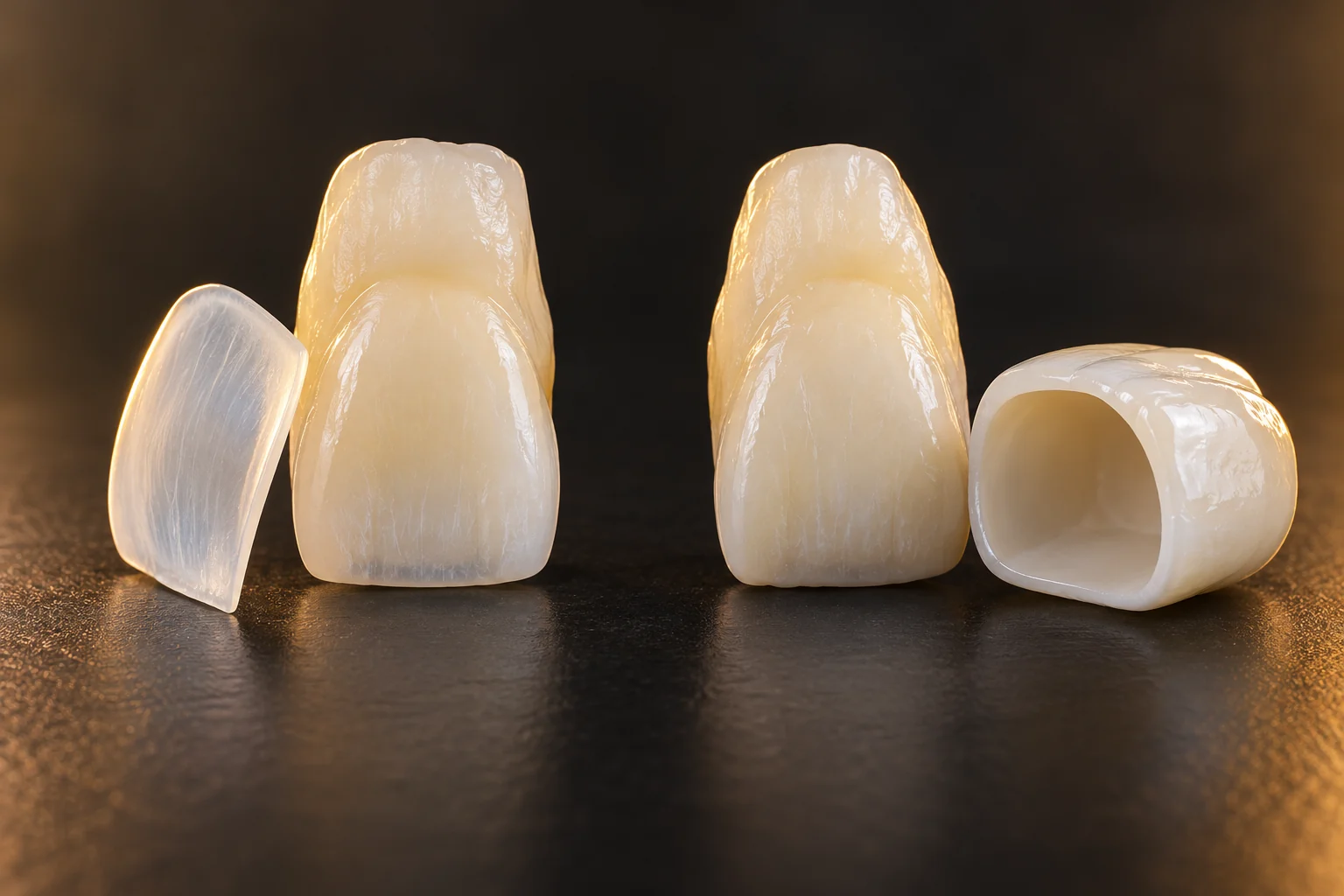
Veneers vs crowns is a decision about the condition of each tooth, not just the appearance of a smile. A veneer mainly changes the front surface. A crown covers the visible tooth more fully. The appropriate choice depends on the remaining tooth structure, bite, gums and your priorities. A careful assessment should come before choosing a material or a package.
Veneers vs crowns: the basic difference
A veneer is a thin facing bonded to the front of a tooth. Dentists may consider it for selected concerns about shape, color or small gaps. A crown acts as a cap around the tooth. It may be considered when a tooth needs broader restoration, such as after significant damage. Neither treatment replaces a missing tooth root.
This distinction matters because two teeth in the same smile may need different approaches. A healthy-looking front tooth and a heavily restored neighboring tooth should not automatically receive the same preparation. Ask the dentist to explain the indication for each proposed restoration.
| Point to compare | Veneer | Crown |
|---|---|---|
| Coverage | Mainly the front surface | More complete coverage of the visible tooth |
| Typical discussion | Selected changes in appearance | Restoration of a tooth needing wider coverage |
| Preparation | Depends on enamel and design | Usually involves shaping around the tooth |
| Decision factors | Enamel, bite and gum health | Remaining structure, bite and restoration needs |
| Maintenance | Daily cleaning and review | Daily cleaning and review |
Start with the most conservative suitable option
Explain what bothers you before asking for a specific procedure. If the concern is color, ask whether whitening is appropriate. If the problem is alignment, ask about orthodontic options. A small defect may sometimes have a different restorative solution. The aim is to match the intervention to a diagnosed need while preserving healthy tissue where possible.
Some preparations permanently remove tooth tissue. Therefore, ask how much preparation is planned and whether the proposed change is reversible. A digital image or a demonstration can help explain the shape, but it cannot guarantee an identical final result or show every biological limitation.
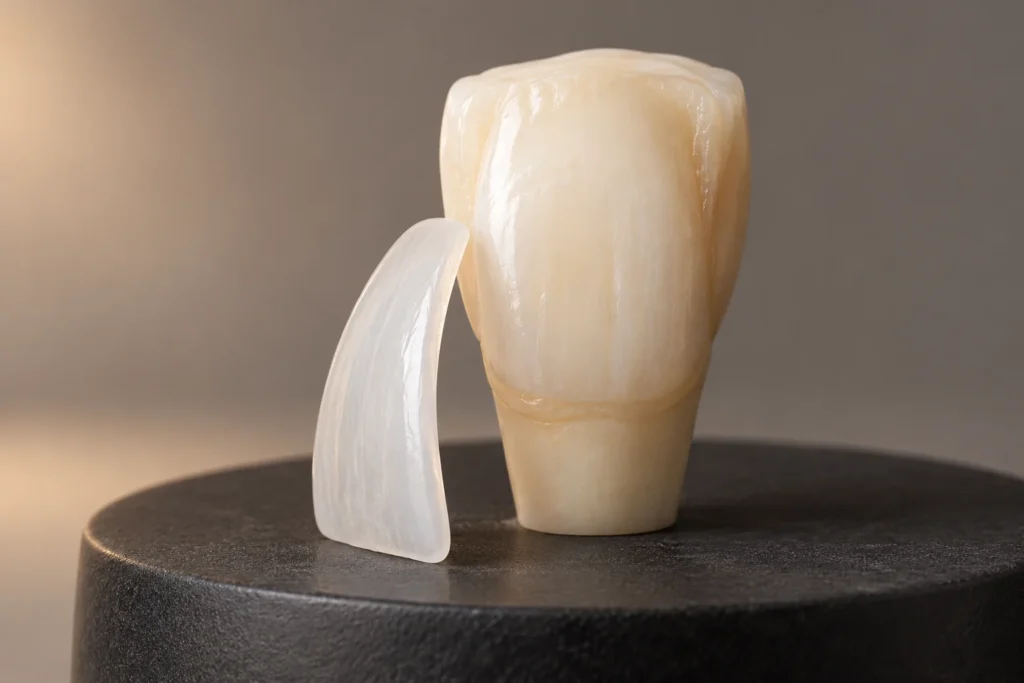
What a veneers vs crowns assessment should cover
A useful consultation considers existing fillings, decay, gum inflammation, enamel, tooth vitality and biting contacts. Your dentist may recommend imaging when clinically indicated. Mention grinding, clenching, sensitivity and previous treatment. These details can affect both the proposed restoration and the way it needs to be protected afterwards.
Ask to see the plan tooth by tooth. Find out whether any tooth needs treatment before cosmetic work begins. Also ask what happens if an unexpected finding appears during preparation. Having this conversation early is more useful than choosing only by photographs or by the name of a ceramic.
Veneers vs crowns: color and shape
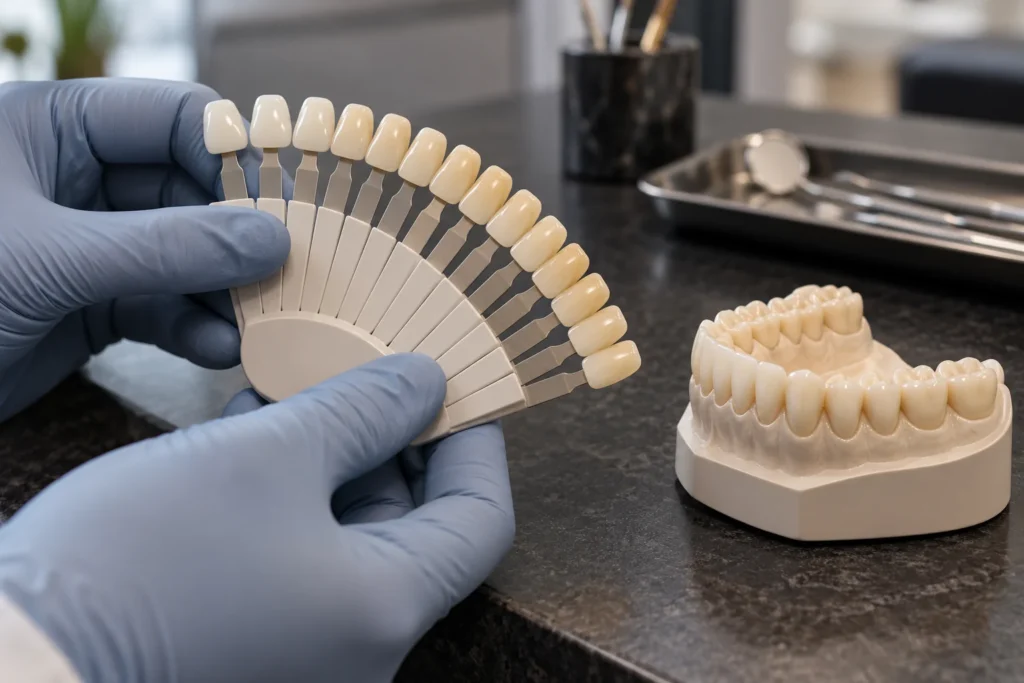
Discuss the shade in suitable lighting and alongside neighboring teeth. A very bright sample does not suit every smile. Shape, surface texture and how much tooth shows when you speak also affect the result. If a trial or temporary stage is offered, use it to discuss comfort, speech and appearance before the final decision.
Keep expectations specific. For example, explain whether you want to soften an uneven edge or reduce a visible shade difference. This gives your dentist a clearer goal than a request to copy another person’s smile.
Veneers vs crowns: aftercare and cost
When comparing veneers vs crowns, request a written estimate that identifies each tooth, the planned material, temporary work and review visits. Ask what repairs or replacements would involve. A price per tooth does not, by itself, explain the scope of care.
Both options require ongoing cleaning and check-ups. Avoid using restored teeth as tools. If you grind your teeth, discuss whether a protective appliance is indicated. Report a changed bite, persistent discomfort or a loose restoration. Neither veneers nor crowns should be presented as a maintenance-free lifetime treatment.
For independent background, read the ADA guide to veneers and the NHS overview of dental treatments.
Frequently asked questions
Are crowns always better because they cover more?
No. More coverage is not automatically a benefit for a tooth that does not need it. The clinical indication should guide the choice.
Can veneers straighten every crooked tooth?
No. They change appearance without moving roots. Some alignment or bite problems call for orthodontic assessment instead.
Will the same option suit every tooth?
Not necessarily. A plan may combine different treatments after examining the needs of individual teeth.
Discuss your options at Crystal Istanbul
Read about dental crowns and our smile treatment service, then arrange a consultation. Bring your veneers vs crowns questions and ask for an explanation of alternatives before making a decision.
General educational information, not an individual diagnosis. Discuss treatment decisions with your dentist.