
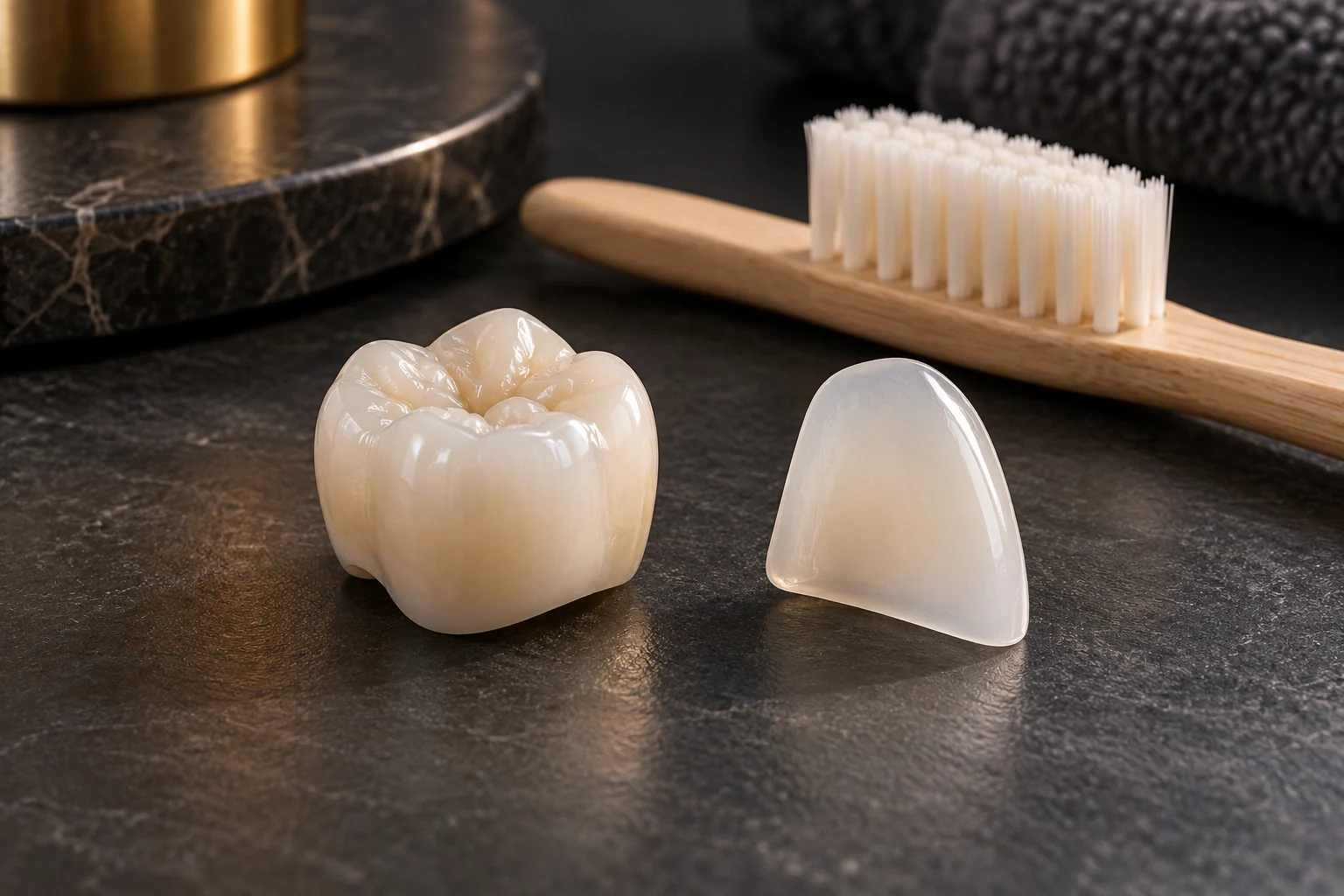
Crown and veneer care continues after fitting day. Your routine should make it practical to clean the restoration and surrounding teeth, notice changes and attend appropriate reviews. A clear handover is especially useful when treatment takes place away from home. This guide explains what to ask and organize, rather than prescribing one routine for every restoration.
Crown and veneer care begins with a handover
Before leaving the practice, confirm what has been fitted and whether any restoration is temporary. Ask for written instructions appropriate to the material and treatment stage. Keep the treatment summary, useful photographs and the practice’s contact details together. A simple folder makes a future conversation with another dentist easier.
Repeat the key instructions back to the team in your own words. Clarify anything that seems difficult to follow at home. If you need another language, ask for an explanation you can understand before the appointment ends. Knowing what to do matters more than receiving a long document you cannot use.
Daily crown and veneer care
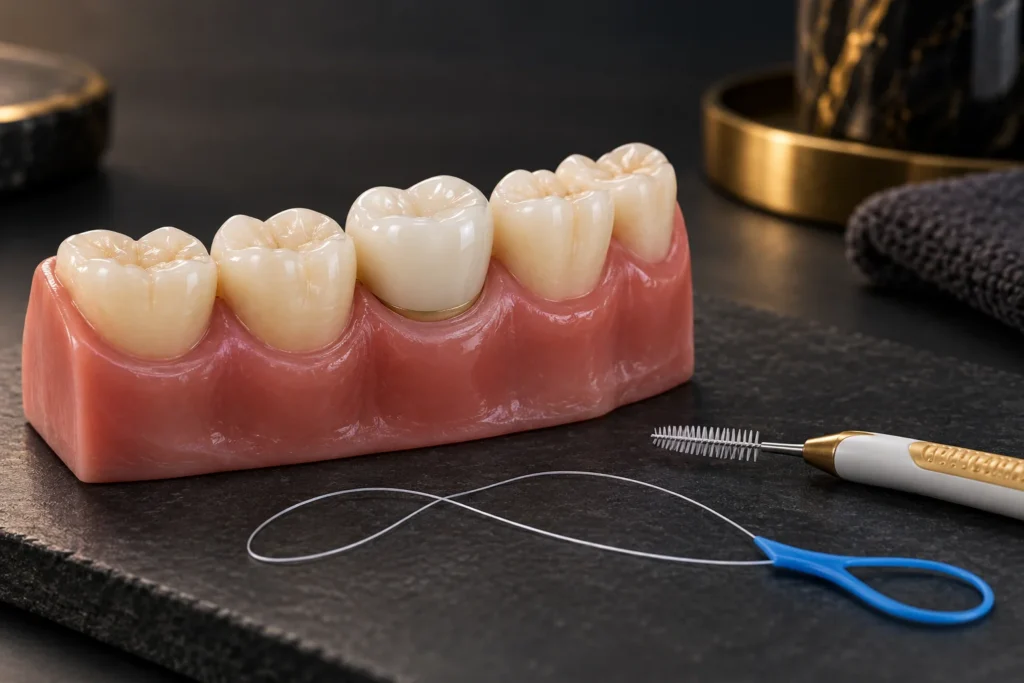
Brush with suitable fluoride toothpaste and clean between teeth using tools selected with your dental team. Ask for a demonstration around restoration margins and any difficult contact areas. Bring your usual tools to a review if you are unsure whether they reach the intended surfaces comfortably.
| Routine step | Question for the team |
|---|---|
| Brushing | Can you show comfortable access around the margins? |
| Cleaning between teeth | Which tool and size fit this restoration? |
| Changes in comfort | How and when should I report them? |
| Review visits | Who will check the restoration after I return home? |
Habits that belong in the discussion
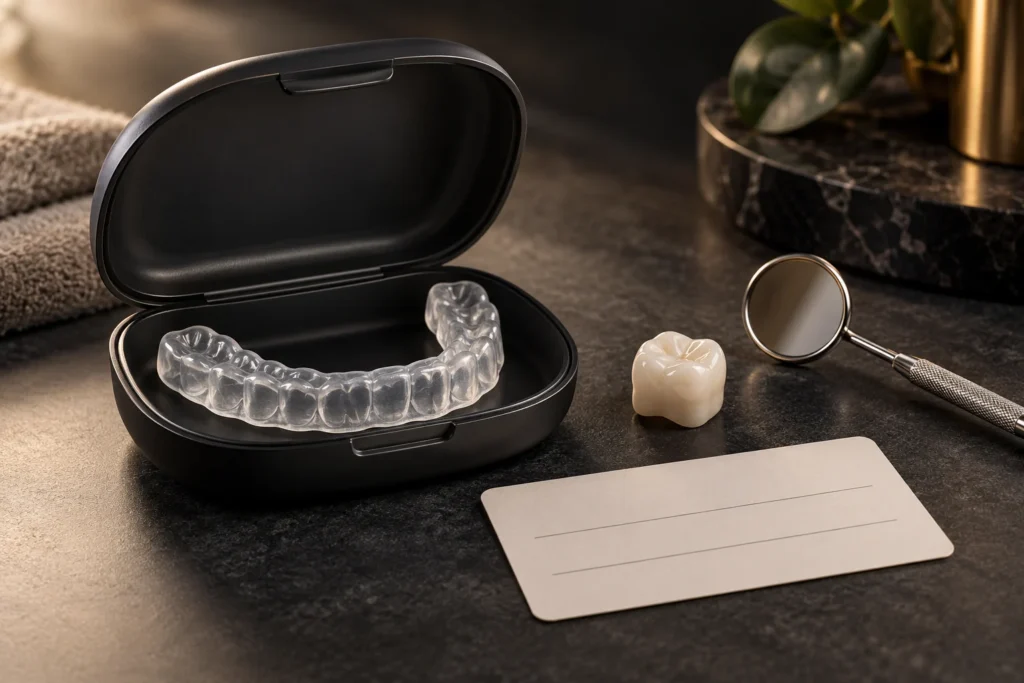
Avoid using your teeth to open packaging or bite hard objects. Tell the dentist if you clench or grind, particularly if someone has noticed it during sleep. A protective appliance may be discussed when indicated. Do not buy or reshape a guard as a substitute for an assessment of your bite and restoration.
Ask when normal eating is appropriate for your particular treatment. Instructions for a temporary crown can differ from those for a final restoration. Keep those stages separate in your notes. If advice from another person conflicts with your written plan, contact the treating team rather than guessing.
Crown and veneer care includes reviews
A review can assess comfort, contacts, cleanliness and surrounding tissues. Agree the interval for your own situation and keep the appointment even if the appearance remains satisfactory. Before traveling, discuss who can provide local checks and how records will be shared if another clinician needs to help.
Report a changed bite, persistent discomfort, a crack or a restoration that feels loose. Do not attempt to glue or adjust it yourself. If a restoration comes away, keep it safe and contact a dentist for instructions. Significant swelling or severe pain needs prompt assessment; breathing or swallowing difficulty requires urgent medical care.
Frequently asked questions
Does ceramic mean that cleaning is unnecessary?
No. The surrounding teeth and tissues still need daily care. Ask how to clean the specific restoration.
Can I assume every guard fits every smile?
No. Discuss fit and suitability with your dentist, especially after new restorations.
How long will the restoration last?
No universal lifespan can be promised. Ask about the factors relevant to your case and future maintenance arrangements.
See the ADA guides to brushing and interdental cleaning. Explore our crown service, read our veneers and crowns comparison and arrange a review for individual crown and veneer care.
General educational information, not an individual diagnosis. Discuss treatment decisions with your dentist.