
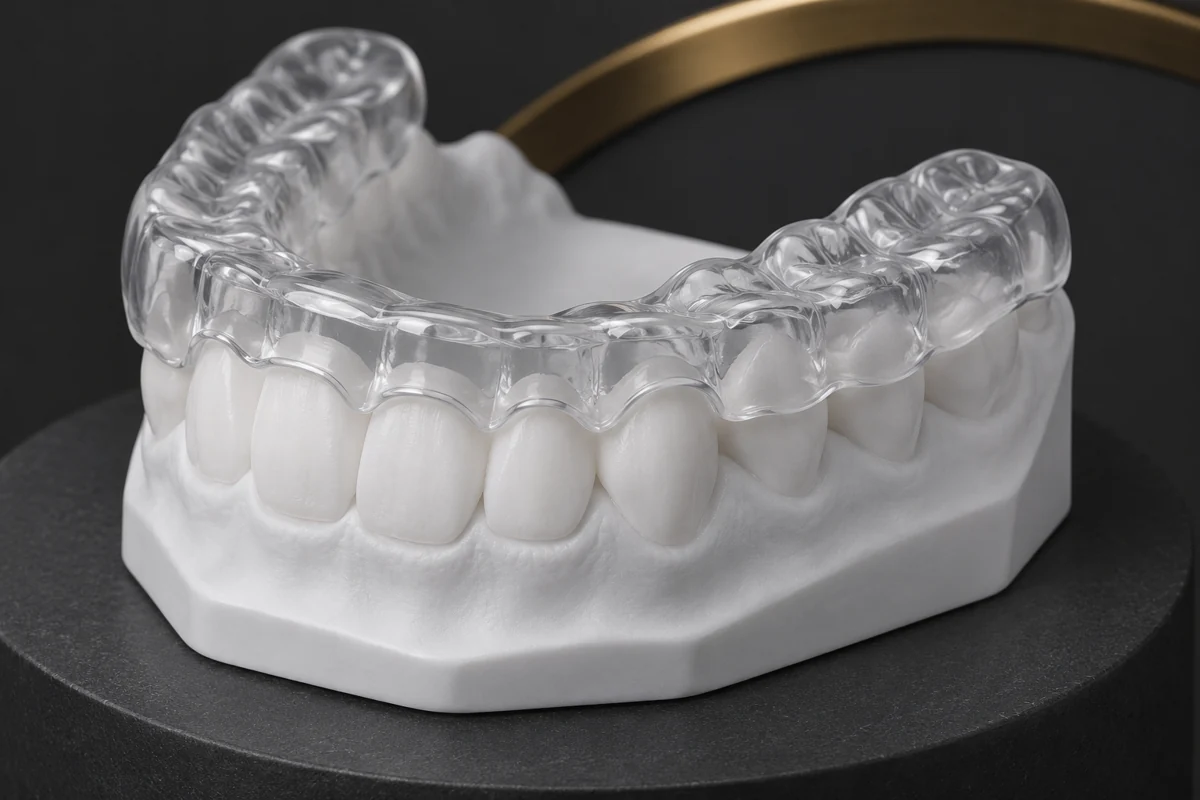
Teeth grinding means grinding or clenching your teeth, during sleep or while awake. Morning jaw fatigue or worn edges deserve an assessment, but neither proves the cause on its own. A useful plan starts with understanding the pattern, then protecting your teeth and checking progress rather than choosing an appliance at random.
Editorial preparation: Crystal Istanbul. Source-supported patient education; individual assessment and diagnosis are required.
Which signs of teeth grinding should you mention?
A sleeping partner may hear grinding, or you may notice tired jaw muscles. Sensitivity, damaged teeth or repeatedly broken restorations may also prompt a check. Headaches and ear pain have other possible causes, so record their timing and location. The NIDCR bruxism guide explains the difference between sleep and awake bruxism.
Bring earlier photographs if available, and describe fillings or crowns that have chipped more than once. Ask whether the wear appears recent and how the dentist will track change. A photograph of old wear cannot, by itself, establish how active the problem is today.
What can contribute to clenching?
Stress, sleep problems, some medicines and personal habits may be relevant. An association does not explain every case. Mention loud snoring or breathing pauses witnessed during sleep so the clinician can consider medical assessment. Do not stop a prescribed medicine yourself; bring the name and discuss it.
The NHS teeth grinding information offers a useful starting point. Prepare specific observations: does clenching increase at work, do you wake with a tired jaw, or did symptoms begin after a medicine changed? These details support a more focused appointment than a general report of sore teeth.
Does a night guard cure teeth grinding?
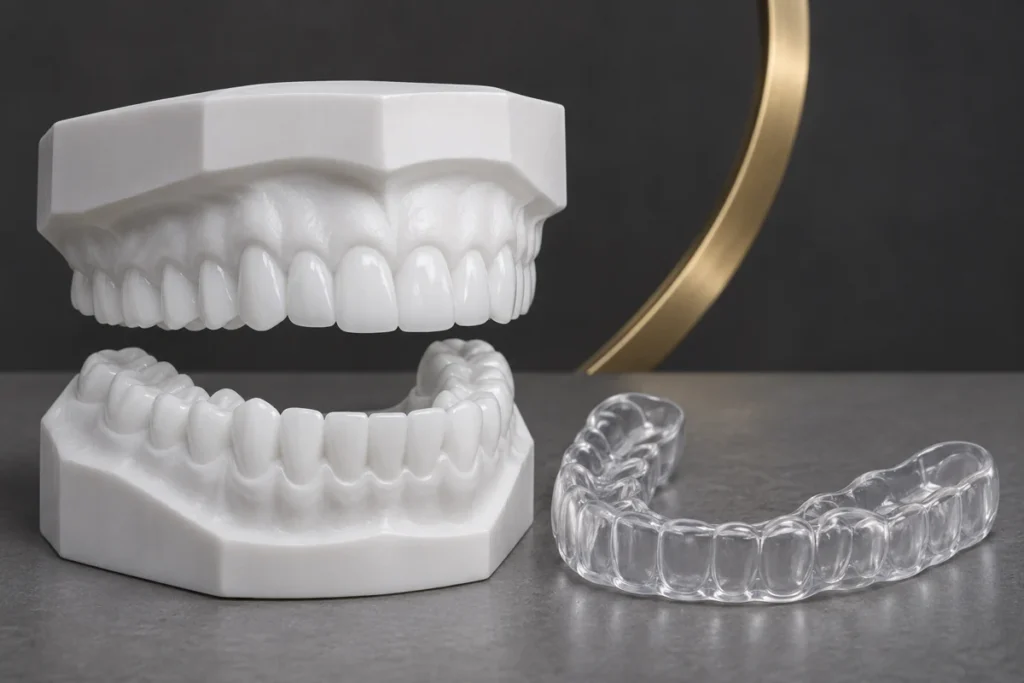
A suitable guard may protect teeth, but it does not guarantee that every cause of grinding will disappear. Its design and fit require assessment of the teeth and bite. Ask what it is meant to achieve, how to try it safely and when its fit will be reviewed. Report new pain or a changed bite sensation.
A night guard, an orthodontic aligner and a retainer have different jobs. Crowns should not be assumed to remove the reason for clenching either. Before restorative work, ask how both the teeth and the restorations will be protected. Our crown and veneer care guide explains related maintenance questions.
How can you support the plan at home?
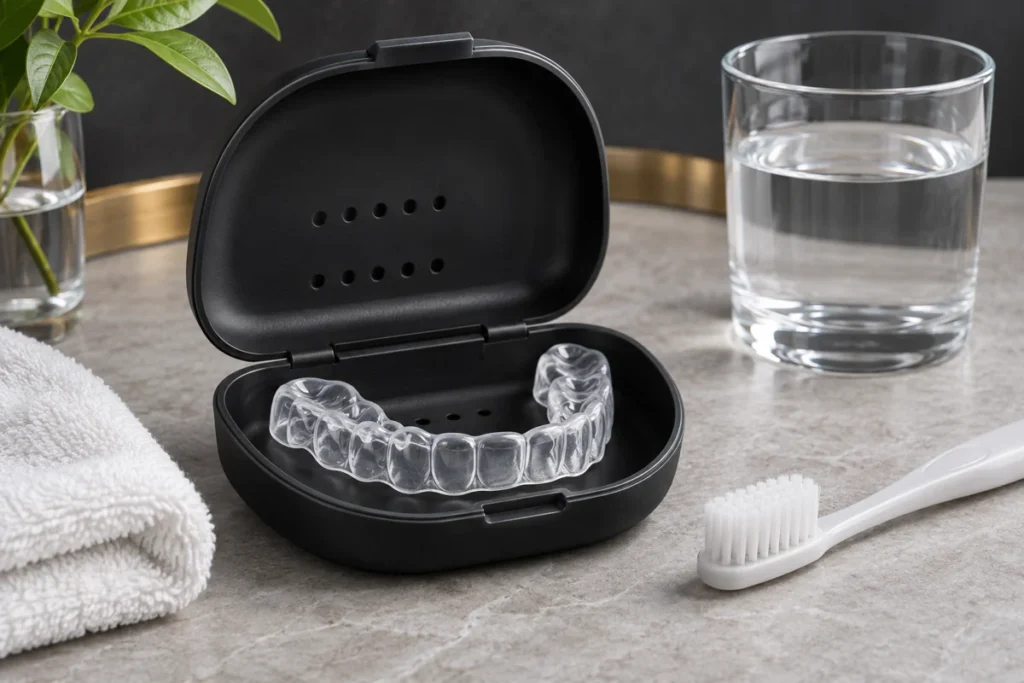
Notice daytime clenching and allow the jaw to relax without forcing it. Discuss sleep routines and habits with your clinician. Avoid forceful exercises or self-selected appliances that permanently alter the bite. For a guard, follow instructions specific to its material: ask about cleaning products, water temperature and storage instead of assuming hot water is suitable.
Questions before choosing treatment
Does jaw pain mean I need surgery?
No. Jaw pain needs a diagnosis and does not automatically require a major intervention. The NIDCR information on jaw disorders supports discussing conservative options. Request a clear explanation before any treatment that permanently changes your teeth or bite, including the alternatives and limitations.
How long will the plan take and what does it cost?
This depends on the findings, appliance and reviews required. Ask for a written breakdown covering assessment, manufacture, adjustments and follow-up. Clarify whether replacement is included. If you travel to Istanbul, agree who will review an uncomfortable appliance and how local follow-up will work after returning home.
When should I contact a dentist promptly?
A new fracture, increasing pain or difficulty opening the mouth warrants contact and assessment. Do not continue wearing an appliance that hurts without advice. Severe swelling or trouble breathing or swallowing requires emergency care rather than waiting for a routine appointment.
Prepare your teeth grinding consultation
List your symptoms, medicines and the times discomfort occurs, and bring any current guard. Explore Crystal Istanbul services and request an assessment. Ask about the diagnosis, the purpose of protection and how progress will be measured; those answers matter more than the appliance name alone.